
The Reality Of End Of Life Care With Chaplain Cylon George
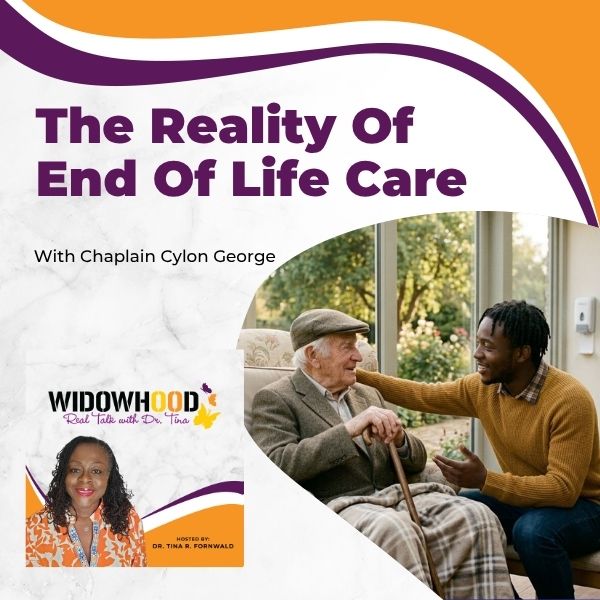
Most people often consider getting end of life care once they have exhausted all other options – but that is when it is all too late. Tina Fornwald sits down with Cylon George, who shares about his work as a seasoned hospice chaplain who bridges clinical support and soulful connection. He dispels different misconceptions about hospice care and emphasizes why conversations about it should not feel dreadful. Chaplain George also explains how to handle the guilt and emotional burden often associated with caregiving, allowing them to live fulfilling lives while ensuring the betterment of other people’s lives. I am sharing my experience of loving the same man for 32 years, a mother to two adult children, a retired military officer, a breast cancer survivor, and my connections with others. Anyone experiencing suicidal thoughts should reach out to a suicide hotline or local emergency number in their country: Psychology Today Suicide Hotlines and Prevention Resources Around the World. — Watch the episode here Listen to the podcast here The Reality Of End Of Life Care With Chaplain Cylon George Chaplain George, welcome to Widowhood. Dr. Tina, thank you for having me. Thank you for being in the Widowhood. If we were to see a ticker tape, what’s going on in your head, what would be the backstory? Do you mean what I think of when I hear widowhood? Yes, or being in this space a widowhood show. I’m thinking of a community of people who have been through loss and grief, and people who want to be in community with one another, reaching out, especially in a culture that is silent about these things, like grief and knowing how to navigate grief. I see the community as brave souls raising their hands, saying, “I want to talk about this. I want to connect with people who are going through a similar experience.” I imagine it’s men and women. It’s an honor to be asked to speak, contribute, and offer my insights and thoughts. How George Became A Hospice Chaplain Thank you. You pretty much nailed it. When I thought about this organization, that is what I wanted to create because people are silent. It is a moment when they need people the most. To be able to raise your hand and be given permission and validated about your feelings is important. Before we start talking about the hospice, how did you become Chaplain George? What was the road to that? It’s a long road, but I will try to make it as succinct as possible. I was raised Catholic. I’m from the islands. I’m not originally from the US. You’ll probably notice an accent at times. I also stutter. I’ll be upfront about that. If you hear stumbling, that’s why. I grew up on the little Island of Trinidad and Tobago. I grew up Catholic. I felt a call to the priesthood very early in my life. It was something I wrestled with and pushed away. Long story short, I started seminary studies, but I did not complete those studies. I met my wife, got married, and had children, but I continued my theological education and got my master’s in Theology. I knew when I was getting my degree that I did not want to work in the hospital. I knew that I wanted to work with young people. I wanted to be in the college setting. I loved being in the college setting. When I got my Master’s, I immediately went and got a job working as a college chaplain. I did that for five years. I transitioned out of that into a new opportunity, something very different from chaplaincy. I stepped out of my calling. I didn’t last a year in that setting. I ended up losing that job. It felt like God was saying, “No, I need you back here in this space.” By that time, I had grown and matured in my own spirituality, my own spiritual walk. My wife had said to me, “Maybe you might want to consider the hospital now.” That opened my mind to going into the setting that I was initially resisting, and thinking, “I don’t want to do that.” One thing led to another that led to hospice, which was something I was only vaguely aware of. When I heard about it, I thought, “I might be ready for this kind of work.” It was an instinct. I had no idea. Once I got the job, it felt right from the very start. I’ve been a hospice chaplain for many years. Thank you. A couple of questions that come to mind. You mentioned originally thinking about going into being a priest. If I understand that correctly, in the methodology that you’re looking at, one could not be married in that role. That’s right. Do you feel being married gives you a better opportunity to support people in totality than not being married? If so, how? Being married is very much integral to how I do this work. As you may know, marriage is not easy. There is so much that goes into making marriage work and giving of yourself to another. Also being able to compromise and to have conversations. Sometimes difficult conversations with your spouse in that intimate setting. Many of the people I serve are married couples. They are people who have been together for many years. It’s interesting. A lot of what I learn from them informs me and helps me in my own marriage and my own relationships. I feel very humbled because I don’t feel like I’m offering a lot out of my experience. It’s because a lot of these people have been married way longer than I have. Being able to have that common experience though allows us to have a conversation that feels more authentic. I can understand when they say, “My marriage wasn’t perfect. This thing happened in my marriage.” I can meet them where they are
The Reality Of End Of Life Care With Chaplain Cylon George Read More »


